Heat
Large-Scale Tree Felling for Development Projects in Maharashtra Raises Environmental Concerns
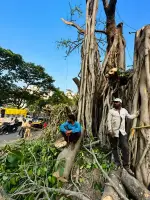
Large-scale tree felling for highways, metro corridors, industrial projects, mining activities, and urban expansion in Maharashtra has triggered growing environmental concerns across the state. Environmental groups, local citizens, and activists have criticized the government for prioritizing infrastructure projects at the cost of ecological balance.
One of the most debated examples remains the Mumbai–Nagpur Samruddhi Mahamarg (Expressway) project. Reports indicated that nearly 2 lakh trees were felled for the project, while permissions for cutting additional trees were also processed during different phases of construction. The 701-km expressway passes through several districts including Nagpur, Wardha, Amravati, Washim, Buldhana, Jalna, Chhatrapati Sambhajinagar, Nashik, and Thane, impacting large green belts and forest patches.
The Aarey Metro car shed project in Mumbai also sparked major protests after thousands of trees were cut for metro infrastructure development. Similar concerns have been raised over tree cutting for coastal road projects, Eastern Freeway expansion, industrial corridors, and mining operations in Vidarbha and other regions.
Government data and reports presented during legislative discussions have repeatedly highlighted the scale of tree loss linked to major infrastructure projects. In some discussions, claims were made that nearly 3 lakh trees had been cut for the Samruddhi Expressway and associated works.
Environmental experts warn that increasing tree loss is directly contributing to rising temperatures across Maharashtra. Regions such as Vidarbha and Marathwada have recorded temperatures above 45°C during peak summer periods in recent years. Reduction in green cover is also impacting groundwater recharge, soil moisture retention, and rainfall patterns.
Experts further point out that deforestation is intensifying human-wildlife conflict as forest habitats continue shrinking. Rural and tribal communities dependent on forests for livelihood are among the worst affected. Several regions are also witnessing worsening water scarcity due to declining ecological stability.
While the government claims compensatory afforestation is being carried out, environmental activists argue that newly planted saplings cannot replace decades-old mature trees that played a crucial role in maintaining biodiversity and climate balance. Questions have also been raised regarding the survival rate and monitoring of plantation drives.
Environmental organizations have accused authorities of following a “development-first” approach without adequately considering long-term ecological consequences. Activists warn that if unchecked tree felling continues, Maharashtra could face more severe heatwaves, water shortages, air pollution, and biodiversity loss in the coming years.
Large-scale tree felling for highways, metro corridors, industrial projects, mining activities, and urban expansion in Maharashtra has triggered growing environmental concerns across the state. Environmental groups, local citizens, and activists have criticized the government for prioritizing infrastructure projects at the cost of ecological balance.
One of the most debated examples remains the Mumbai–Nagpur Samruddhi Mahamarg (Expressway) project. Reports indicated that nearly 2 lakh trees were felled for the project, while permissions for cutting additional trees were also processed during different phases of construction. The 701-km expressway passes through several districts including Nagpur, Wardha, Amravati, Washim, Buldhana, Jalna, Chhatrapati Sambhajinagar, Nashik, and Thane, impacting large green belts and forest patches.
The Aarey Metro car shed project in Mumbai also sparked major protests after thousands of trees were cut for metro infrastructure development. Similar concerns have been raised over tree cutting for coastal road projects, Eastern Freeway expansion, industrial corridors, and mining operations in Vidarbha and other regions.
Government data and reports presented during legislative discussions have repeatedly highlighted the scale of tree loss linked to major infrastructure projects. In some discussions, claims were made that nearly 3 lakh trees had been cut for the Samruddhi Expressway and associated works.
Environmental experts warn that increasing tree loss is directly contributing to rising temperatures across Maharashtra. Regions such as Vidarbha and Marathwada have recorded temperatures above 45°C during peak summer periods in recent years. Reduction in green cover is also impacting groundwater recharge, soil moisture retention, and rainfall patterns.
Experts further point out that deforestation is intensifying human-wildlife conflict as forest habitats continue shrinking. Rural and tribal communities dependent on forests for livelihood are among the worst affected. Several regions are also witnessing worsening water scarcity due to declining ecological stability.
While the government claims compensatory afforestation is being carried out, environmental activists argue that newly planted saplings cannot replace decades-old mature trees that played a crucial role in maintaining biodiversity and climate balance. Questions have also been raised regarding the survival rate and monitoring of plantation drives.
Environmental organizations have accused authorities of following a “development-first” approach without adequately considering long-term ecological consequences. Activists warn that if unchecked tree felling continues, Maharashtra could face more severe heatwaves, water shortages, air pollution, and biodiversity loss in the coming years.
88

Sunil Manvar
Baby Cockroach · 50 pts
Related Issues
Tress are cutting every where in the world 219 views Destroying the Arrey Forest 130 views ethanol blending issue 156 views Assam Flood EmergencyHeavy Floods in Assam 204 views